The Real Estate Red Flag Guide Every San Antonio Buyer Needs Before Making an Offer

Buying a home is exciting. It can also make you do things you'd never do with any other purchase, like convince yourself that a little mold in the basement "probably isn't a big deal."
You're not alone. According to a 2026 survey by Clever Real Estate, 76% of home buyers would be willing to overlook red flags in a home. And in some cases, it really isn’t a big deal. Not every red flag means you should run.
The key is knowing which problems are negotiating leverage, which ones need a closer look, and which ones should send you straight back to the car.
Here's how I break it down for my buyers.
Which red flags are actually opportunities?
Some things that scare off other buyers can actually work in your favor. If you spot one of these, don't panic, strategize.
A home that's been sitting on the market.
Almost half of buyers (43%) say a long time on market makes them suspicious. But a home that's been listed for 60+ days in San Antonio usually means one thing: a motivated seller.
That's your opening to negotiate on price, closing costs, or repairs. Ask me why it's been sitting; the answer is usually fixable.
A home that fell out of contract.
Only 20% of buyers flag this as concerning, and they're right not to overreact. Deals fall apart for dozens of reasons that have nothing to do with the house. The buyer's financing fell through, they got cold feet, or they couldn't sell their current home.
Cosmetic issues.
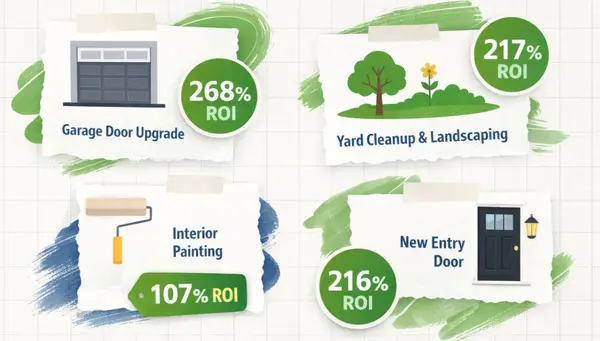
Ugly paint, dated fixtures, overgrown landscaping, worn carpet. These scare away buyers who can't see past the surface.
If you can, you'll face less competition and often get a better price.
A $5,000 cosmetic refresh on a home you bought for $15,000 under asking? That's a win.
A prior foreclosure.
Only 24% of buyers see this as a red flag.
By the time a foreclosed home hits the San Antonio MLS, the title is typically clean and the bank just wants it sold. These can be some of the best deals in San Antonio if you do your due diligence.
Which red flags need a professional opinion before you decide?
These are the ones where the cost can range from "totally manageable" to "walk away." The difference is almost always in the details, which is why you never skip the inspection.
Mold or water damage.
Here's a stat that surprised me: 49% of buyers say mold isn't a dealbreaker. That's fine, as long as you know the math.
A small patch of bathroom mold might cost $500 to $1,500 to remediate. Mold throughout a crawlspace or behind walls? That's $10,000 to $30,000.
The mold itself isn't the dealbreaker. The scope is. Always get a mold specialist's estimate before you decide.
Foundation or structural problems.
Nearly half of buyers surveyed (45%) would still purchase a home with major structural issues. I get it. In San Antonio's market, you don't want to lose a home you love.
But the range here is massive: a minor crack might cost $250 to $800 to seal with epoxy. Foundation piering or major stabilization can run $10,000 to $23,000.
Get a structural engineer's assessment. It costs a few hundred dollars and could save you tens of thousands.
Signs of pests.
A full 57% of buyers say pests aren't a dealbreaker, and in many cases, they're right. A standard pest treatment runs a few hundred bucks.
But termite damage is a different story. Repairs for termite damage average $3,000 to $8,000 and can exceed $15,000 if structural elements are compromised.
The treatment is cheap. The repair bill is where it gets expensive.
Electrical problems.
More than half of buyers (54%) would proceed with electrical issues. Minor fixes are routine. But if the home needs a full rewire, you're looking at $8,000 to $15,000.
Have your inspector flag the panel and wiring type. Knob-and-tube or aluminum wiring is a bigger conversation, because some insurance companies won't cover it.
Plumbing or water pressure issues.
Another 57% of buyers aren't deterred by plumbing problems. Low water pressure might just need a new pressure regulator ($200 to $400). But if you're dealing with corroded pipes, a failing sewer line, or galvanized steel plumbing, a full repipe could cost $4,000 to $15,000.
Which red flags should make you walk away?
These are the ones where no amount of negotiation fixes the problem. The house might be perfect in every other way, but these issues either can't be resolved or will cost you indefinitely.
Environmental contamination nearby.
The Clever survey found that 59% of buyers would overlook nearby environmental contamination.
That's concerning. You can renovate a kitchen. You can't move a Superfund site, a leaking underground storage tank, or industrial runoff.
Check the EPA's Envirofacts database and San Antonio's environmental records before you fall in love with a property near industrial or commercial zones.
Flood zone without affordable insurance.
More than half of buyers (56%) say a flood zone isn't a dealbreaker. But flood insurance costs have been rising sharply under FEMA's Risk Rating 2.0, and in some areas, annual premiums can exceed $3,000 to $5,000 on top of your regular homeowners policy.
Before you make an offer on any property near water or in a low-lying area, check FEMA's flood maps and get an insurance quote. If the numbers don't work, neither does the house.
Unresolvable title issues.
Liens from unpaid contractors, boundary disputes with neighbors, unresolved estate claims, undisclosed easements can all delay or kill a closing and haunt you for years after.
Title insurance covers a lot, but it doesn't cover everything. If the title search turns up complications that can't be cleared before closing, it's usually not worth the risk.
A note for first-time buyers
If you're in your 20s or early 30s buying your first home, this part is for you.
The Clever survey found that younger buyers are significantly more willing to take on serious defects to get into the market. 62% of Gen Z buyers would purchase a home with mold (compared to 40% of boomers). 61% would buy with hazardous materials. And more Gen Z buyers said bad cell phone service is a bigger dealbreaker than cracks in the ceiling.
I understand the urgency. San Antonio's market isn't easy for first-time buyers, and the pressure to stop renting and start building equity is real. But the most expensive home is the one that costs you $30,000 in repairs six months after closing.
You don't have to buy a perfect home. You just need to know exactly what you're buying and what it'll cost to fix. That's what I'm here for.
The bottom line
Red flags aren't all created equal. Some are opportunities in disguise. Some need expert evaluation before you decide. And some should send you looking at the next listing.
The trick is having someone in your corner who knows the difference and who'll be honest with you even when it means slowing things down.
Categories
Recent Posts